


Kosovo Risks Losing Over One Billion Euros as Assembly Faces Crucial Vote on International Agreements
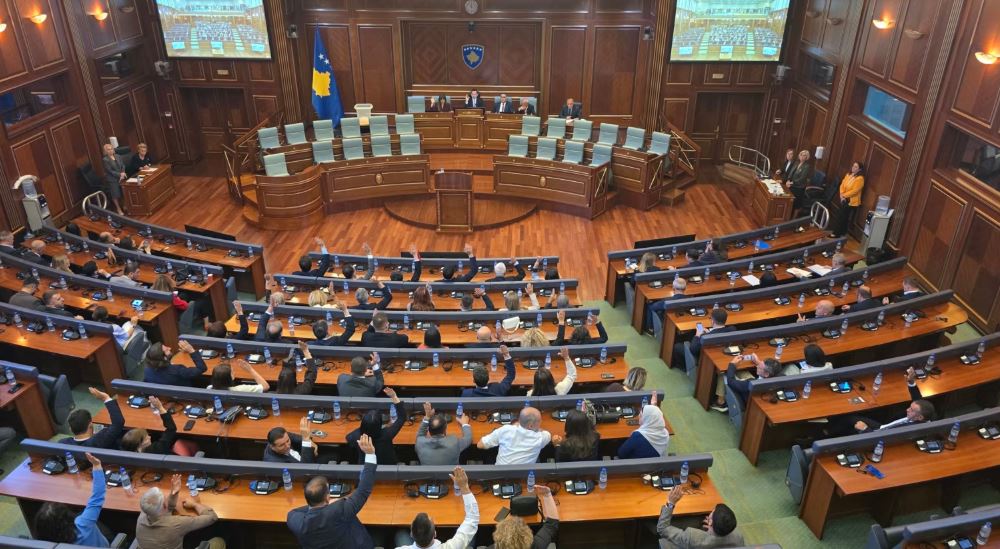
The results of Kosovo’s snap elections held on December 28 confirmed that a simple majority will be formed to constitute the 120-seat Assembly and establish a new government. However, the approval of international agreements and the election of the country’s president require at least 80 votes, creating political uncertainty over whether Kosovo will be able to unlock more than one billion euros in foreign funding.
If the Assembly fails to elect a president even in the third round of voting — which requires at least 61 votes from no less than two-thirds of deputies present — the country could face new parliamentary elections in the spring.
The Vetevendosje Movement (LVV), which won the elections, is calling on opposition parties to cooperate in approving the international agreements and unblocking foreign funds for Kosovo.
Former Deputy Speaker of Parliament Albulena Haxhiu told Radio Free Europe (REL) that international agreements should not be linked to negotiations over the presidency.
“I do not believe that international agreements should be included in discussions about the president. The Assembly must fulfill its obligations regarding these agreements, while the presidency is another phase. We expect the opposition’s will to vote for them, without conditions,” Haxhiu said.
The Democratic League of Kosovo (LDK) has stated that it will not block the approval of the agreements. LDK Vice President Anton Quni told REL that his party has consistently supported agreements that serve the interests of Kosovo.
Meanwhile, the Democratic Party of Kosovo (PDK) and the Alliance for the Future of Kosovo (AAK) did not respond to REL’s requests for comment. However, PDK leader Bedri Hamza recently stated that his party has supported international agreements in the past and will continue to do so when they benefit Kosovo.
Under the EU Growth Plan for the Western Balkans, Kosovo has been allocated around 882 million euros after approving a reform agenda outlining how the funds will be used. In addition, Kosovo is set to receive over 120 million euros through agreements with the World Bank’s International Development Association (IDA).
These include a 90 million euro financing agreement aimed at improving public finance laws and fiscal policies, a 21 million euro loan for the construction of new kindergartens and staff training, and an 18.6 million euro loan for the development of Kosovo’s Health Information System.
Experts warn that Kosovo is already behind schedule. Bekim Salihu from the GAP Institute told REL that the Growth Plan funds are valid until 2027, but Kosovo entered 2026 without allocating the funds or launching the required reforms.
The World Bank has also warned that the deadline for one of the agreements to enter into force is February 13, 2026. These agreements failed to pass in a parliamentary session on November 19, 2025, after the opposition boycotted the vote, arguing that the government had delayed the formation of institutions.
It now remains to be seen whether the new Assembly will approve the agreements in time — or whether political deadlock could once again put vital international funding at risk.